
Breathing Through It: The Science of a Pause
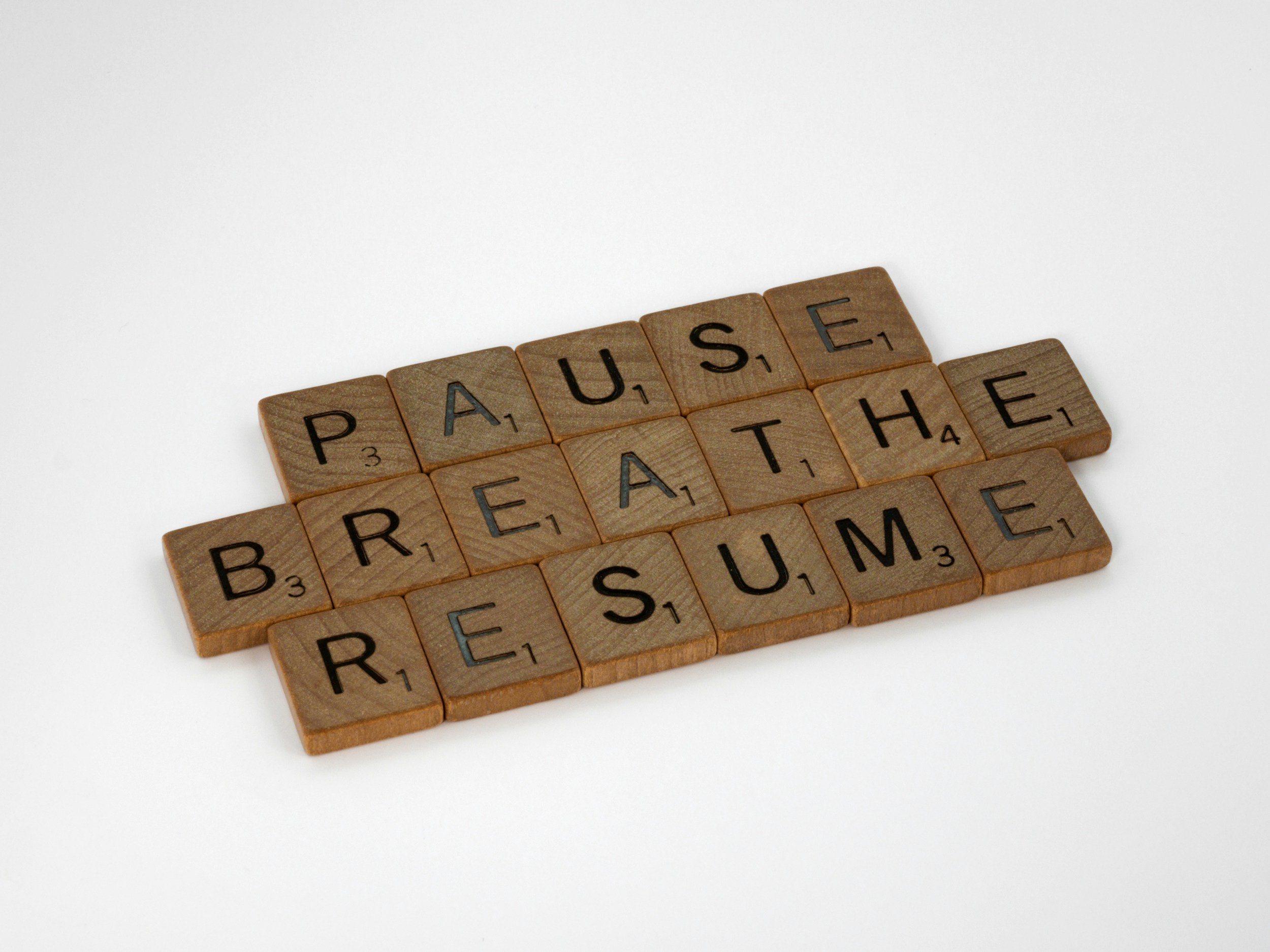
The power of the pause - it’s one of the most underused tools in our communication toolkits.
We talk a lot about the power of the pause: that moment of stillness before you respond, after you land a point, and when the room needs a beat to catch up. It's one of the most underused tools in a communicator's toolkit, and in my experience, one of the most transformative when we actually start using it. During my communications trainings, it's a frequent place I point people, and then return to time and again.
And the pause, at its most useful, is also a breath.
I encourage people to take deep breaths as often as they need to in high-stakes conversations, regularly and unapologetically.
But here's something I'll admit: I sometimes hesitate before I say it out loud.
Take a deep breath. It's been said so many times across wellness spaces and expert recommendations that it can start to sound like background noise, like something one might cross-stitch on a pillow and walk right past every day without actually doing. We nod. We move on. We forget about the practice and the power of it. I know I do.
So I want to make the case for it differently today, and not as a wellness tip, but as a science-backed communication strategy. Because what a single slow breath actually does, to your body, to your brain, to your ability to show up with clarity and composure in a hard moment, is genuinely remarkable. And, it works faster than most of us realize.
Our Nervous System Is Running the Room
When a conversation gets tense, and we're challenged, interrupted, dismissed, or caught off guard, our body responds before our brain catches up. Stress hormones flood in, our heart rate climbs, and our thinking narrows. We're now operating from threat mode, and threat mode is not known for its nuance, its listening, or its leadership presence.
This is merely our biology at work. And, once we understand what's happening beneath the surface, we can start to work with it instead of being run by it.
The Vagus Nerve: Our Body's Built-In Reset Button
There is a nerve that runs the length of us, from the brain all the way down through the heart, lungs, and gut. It has a name, the vagus nerve, and it has been written about extensively by experts who know far more about its biology than I do. What I care about is what it does when we are faced with a challenging interaction: it is the body's main line back to itself. It is a pathway that, after a spike of stress, begins the quiet work of bringing us home to something clearer, more grounded, more measured.
Here is what makes this so relevant for all of us in the workplace (and in life): you can activate it deliberately, on demand, with your breath.
When we take a slow, deep breath, particularly one where the exhale is longer than the inhale, our body registers the shift and sends an immediate signal to the vagus nerve to begin settling things down. Our heart rate slows, and when our heart rate slows, our brain gets the message: we're okay. We can think now.
It all happens within a breath or two.
The Exhale Is the Real Move
Many people, when told to take a deep breath, focus on the inhale. The big breath in, chest puffed, shoulders up, actually keeps the activation going. The exhale is where the calming happens.
A longer exhale than inhale is what tells our body it is safe to settle. This is why many neuroscience and mindfulness experts recommend strategies like breathing in for a count of four, and out for a count of six or eight. That is the kind of ratio where something genuinely shifts.
Here is what matters practically: in a live conversation, this can be completely invisible. We are not talking about a theatrical inhale that signals to the room that you are rattled. We are talking about one quiet breath, in through the nose, and then a slow exhale that runs just a little longer than the inhale. Nobody sees it, but your body feels it.
It's a deliberate pause that looks like thinking, because it is thinking. It is giving your best thinking a fighting chance.
Why This Matters for Leaders
When you calm your body, you are literally sending a calming signal to your brain. The body isn't just responding to your mental state. It is actively shaping it.
This is why presence isn't just a mindset. It's also connected to the physical. And, it’s a practice. It's why the leaders who seem unflappable in difficult conversations, who pause before responding, who don't take the bait, who can sit with discomfort without reacting, seem calmer by temperament. It could be that some actually are, and it may be that many more have developed the habit of working with their nervous system instead of being driven by it.
That's a learnable skill, and it starts with something as simple as a breath.
The Practice
The next time you experience a conversation heating up, whether it’s a pointed question, a perceived challenge to your credibility, or a comment that lands wrong, before you respond, take one slow breath - in for four, and out for six or eight.
You are not stalling, and you are not avoiding.
You are activating the science of calm, in real time, in the room.
That is not a pillow quote. That is leadership.
How might a nice, long exhale support you today?
FAQ
-
When a conversation gets charged, stress hormones flood your system before your thinking brain even catches up. A single slow breath, with a longer exhale than inhale, sends an immediate signal to your nervous system that you're safe. Your heart rate slows, your thinking opens back up, and you can respond from clarity rather than reactivity. It happens faster than most people expect.
-
Yes, and more quickly than most people realize. Because the body and brain are in constant conversation with each other, calming your physical state sends a direct signal to your brain that it's safe to think. Leaders who seem unflappable in hard moments aren't necessarily wired differently. Many have simply developed the habit of working with their nervous system instead of being driven by it. That's a skill anyone can build.
-
The pause is one of the most underused tools in any communicator's toolkit. Used deliberately, it gives weight to what you've just said, creates space for the room to absorb it, and, when it's also a breath, it actively supports your composure and clarity. What looks like a moment of reflection to your audience is, physiologically, your best thinking getting a fighting chance.
-
The science is real and specific. Slow, extended breathing activates the vagus nerve, which lowers heart rate and shifts the brain out of threat mode. This isn't about relaxation as a concept. It's about giving your nervous system a concrete, reliable tool for staying present and grounded in exactly the moments that matter most.
-
The most effective technique, supported by neuroscience and mindfulness research, is inhaling for a count of four and exhaling for a count of six to eight. That extended exhale is what triggers your vagus nerve and begins settling your nervous system down. In a live conversation, this is completely invisible to the room. It looks like thoughtful listening, because that's exactly what it is.
